
We Think We Know
Words, Images, Concepts, and Sounds

In recent weeks much has been written and said about Christopher Nolan’s film The Odyssey. One billionaire called the film “woke” (because of the skin pigmentations and gender identities of some of the actors) and vowed to make a better, “historically accurate” film using his own artificial intelligence (yes, that’s kind of a joke). The usual suspects in the ignorant-and-illiterate-wing media (IAIWM) echoed the need for historical accuracy, apparently unaware that the epic poem is neither journalism nor history. Yes, it’s possible that they were referring to the accuracy of literary scholarship and translations of the poem. Elmer Fudd—the historically accurate Elmer Fudd—says that’s “Verwy, verwy doubtful.”
If Elmer’s not your idea of a reliable source, fair enough. Consider Anne Applebaum, who, admittedly “unburdened by deep knowledge of the original…enjoyed the film enormously.” She pushes back against the billionaire and the IAIWM, pointing out that “In Ulysses, James Joyce’s reworking of The Odyssey, the characters are all Irish, but that doesn’t make the book ‘woke.’”
Of course, some legitimate classics scholars have thrown their hats in the ring and expressed areas in which they feel Nolan missed the mark. That’s fine—perhaps even necessary.
And all of them might enjoy reading what Joyce Carol Oates had to say about film adaptations of literary works back in the 1980s.
One of the best critiques I’ve read concerning what happens when literature is adapted for film, came from Joyce Carol Oates when her 1960s short story, “Where Are You Going, Where Have You Been?” was adapted to film in Smooth Talk (1980s—Laura Dern and Treat Williams). The film was lambasted by some for what it “got wrong” and “did to” her story. Oates wrote an opinion piece in the NY Times, and both argued for the integrity of her intentions and language on the page, and honored the filmmakers’ obligation to stay true to their genre. Oates offered some reasons she thought her story was “unfilmable” and referred to the film adaptation as “an accomplished and sophisticated movie.” She recognized an adaptation as a new work of art and that the adapters’ primary obligation is to make good art, and not try to recreate written art on film.
I wrote the above so I could write what’s below.
In her 1994 book, Bird by Bird, Anne Lamott recalls that when she suggested to her “priest friend Tom” that God probably didn’t like and could not even stand another writer, Tom responded:
“You can safely assume you’ve created God in your own image when it turns out that God hates all the same people you do.”1
Some four hundred years earlier, Spanish mystic Teresa of Avila said something like this:
“All concepts of God are like a jar we break.”2
Also in 1994, in her poem “Each Sound” Dorianne Laux wrote:
“….
Now we talk
about everything, incessantly,
our moans and grunts turned on a spit
into warm vowels and elegant consonants.
We say plethora, demitasse, ozone, and love.
We think we know what each sound means.
….”3
Laux enlarges the playing field, including and transcending Lamott’s priest friend Tom’s and St. Teresa’s concerns about creating and conceptualizing God, and reminds us that we only think we know what our words and images mean—or that while we may know what we mean by them, we only think we know what others mean.
Oates reminds us that the film is not the short story and that each is a work of art. Nolan, through his research, writing, and directing, along with a community of filmmakers, reminds us that the film is not the poem, and that each succeeds in its own way and on its own merits.
I wrote the above so I could write what’s below. Part 2
In a nation and world being unmade and remade by fire, earthquakes, greed, violence, excess, ignorance, storms, meaninglessness, dishonesty, distraction, delusion, incompetence, apathy, helplessness, quiet desperation, and for some, a disquieting certainty, our work is to investigate and interrogate our words, images, and actions. What do we mean by that? What do we mean by that? What do we mean by that? What do we mean by that?
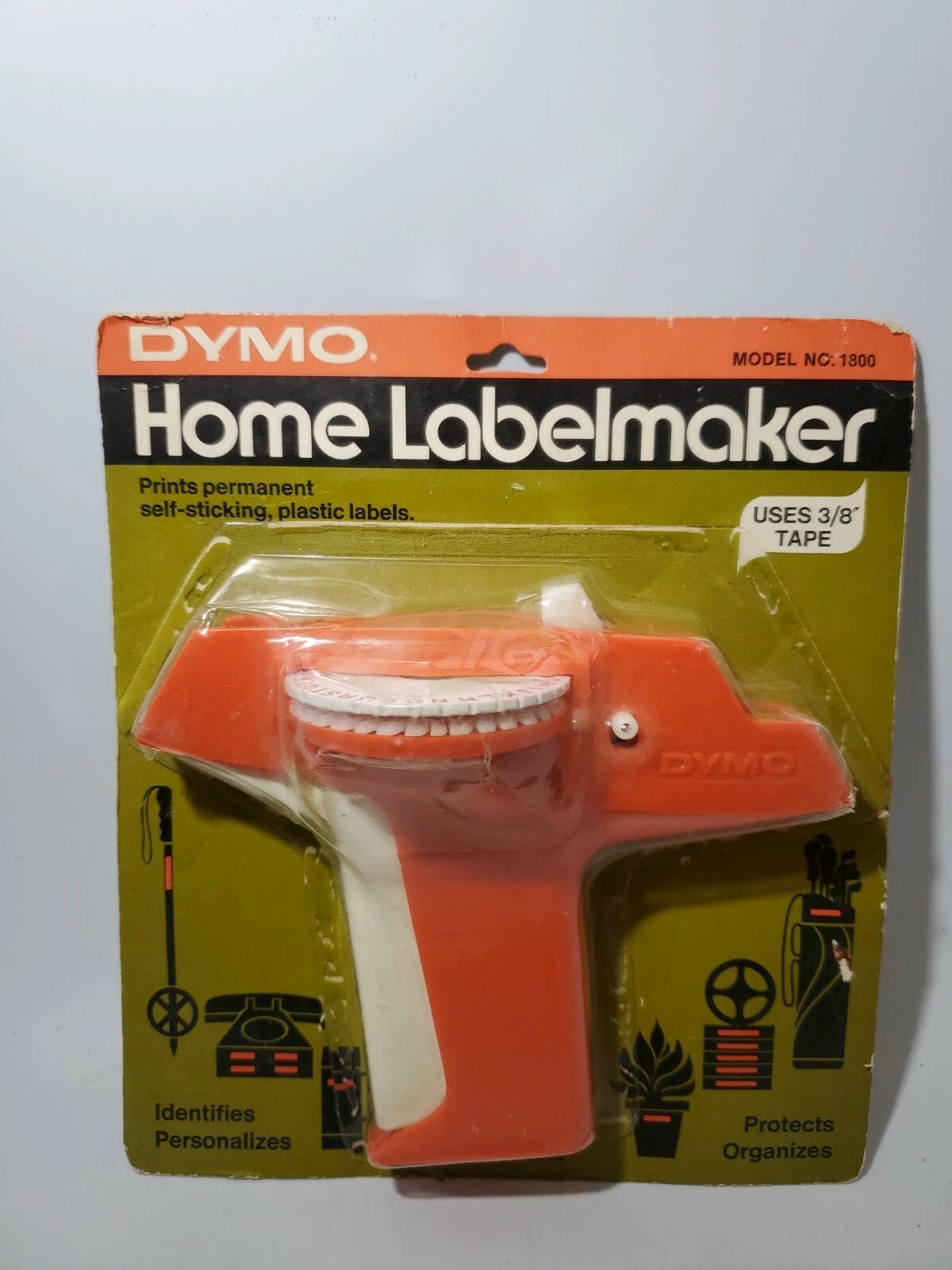
Our homemade, self-sticking, plastic labels are neither permanent nor the thing they are used to name.
We’ll end today with Kristofferson’s “Jesus Was a Capricorn” live in Ottawa in 2007…including a self-critique on harmonica playing.
Anne Lamott, Bird by Bird: Some Instructions on Writing and Life, (Anchor, 1994), 22.
St. Teresa of Avila, Daniel Ladinsky, trans., Love Poems from God: Twelve Sacred Voices from the East and West, (Penguin, 2002), 282.
Dorianne Laux, “Each Sound,” What We Carry, (BOA, 1994), 47.